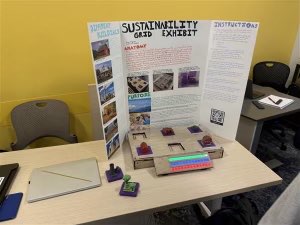
Cornerstone Final Project
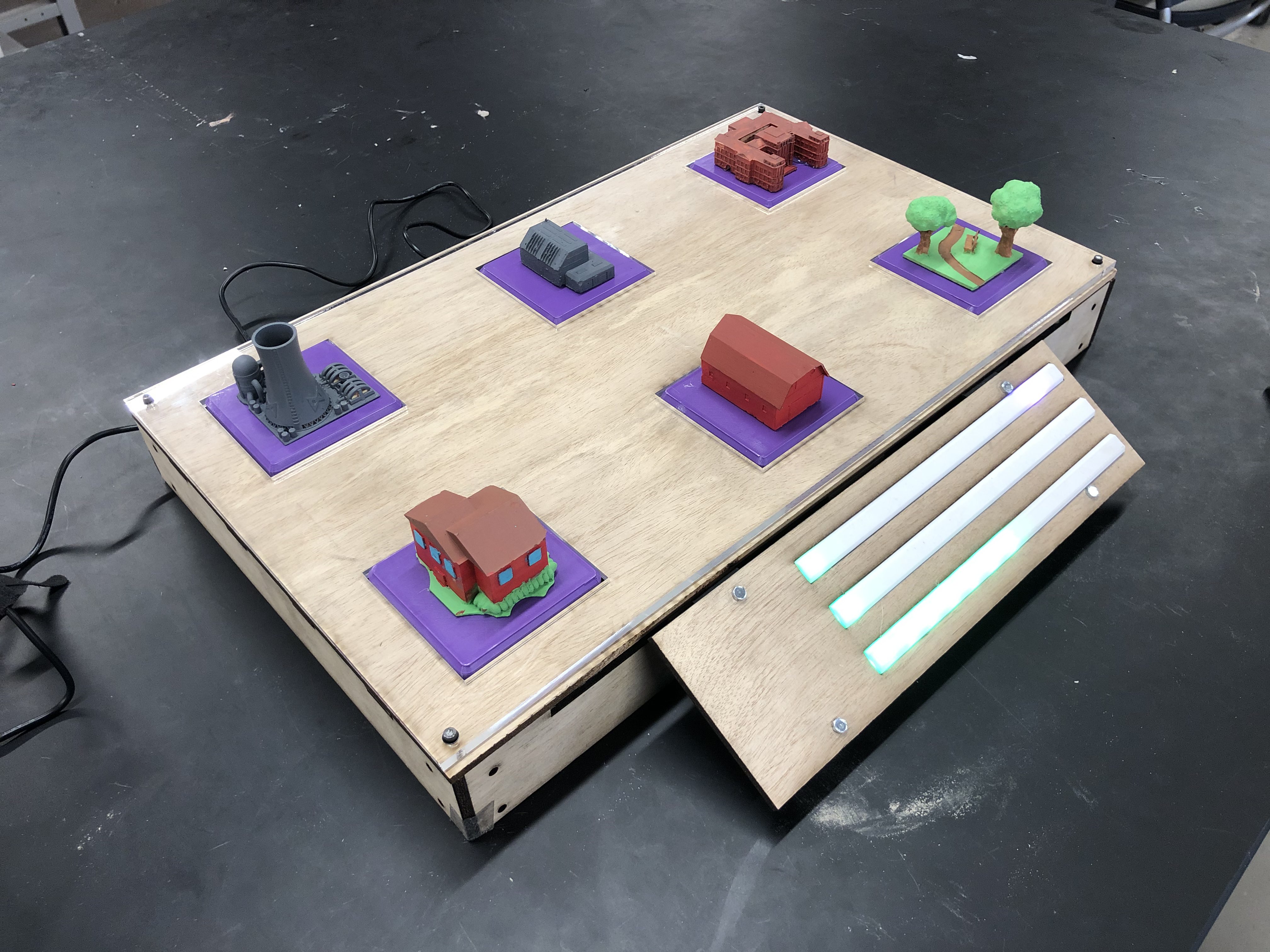
This is the final project for my introductory engineering class, cornerstone. The parameter of this assignment were to make a museum exhibit that teaches elementary children about a chosen topic. Out group designed and built the Sustainability Grid Exhibit, a portable interactive museum experience for children ages 6–11. The exhibit lets users place 3D-printed buildings (school, park, factory, power plant, farm, and house) onto a six-slot city board. Each building contains a unique resistor, so the system can identify what was placed and immediately respond with color-coded LED feedback for emissions, electricity use, and cost, alongside building-specific educational facts on a MATLAB display. The goal was to make sustainability tangible through play by showing real tradeoffs in city planning.
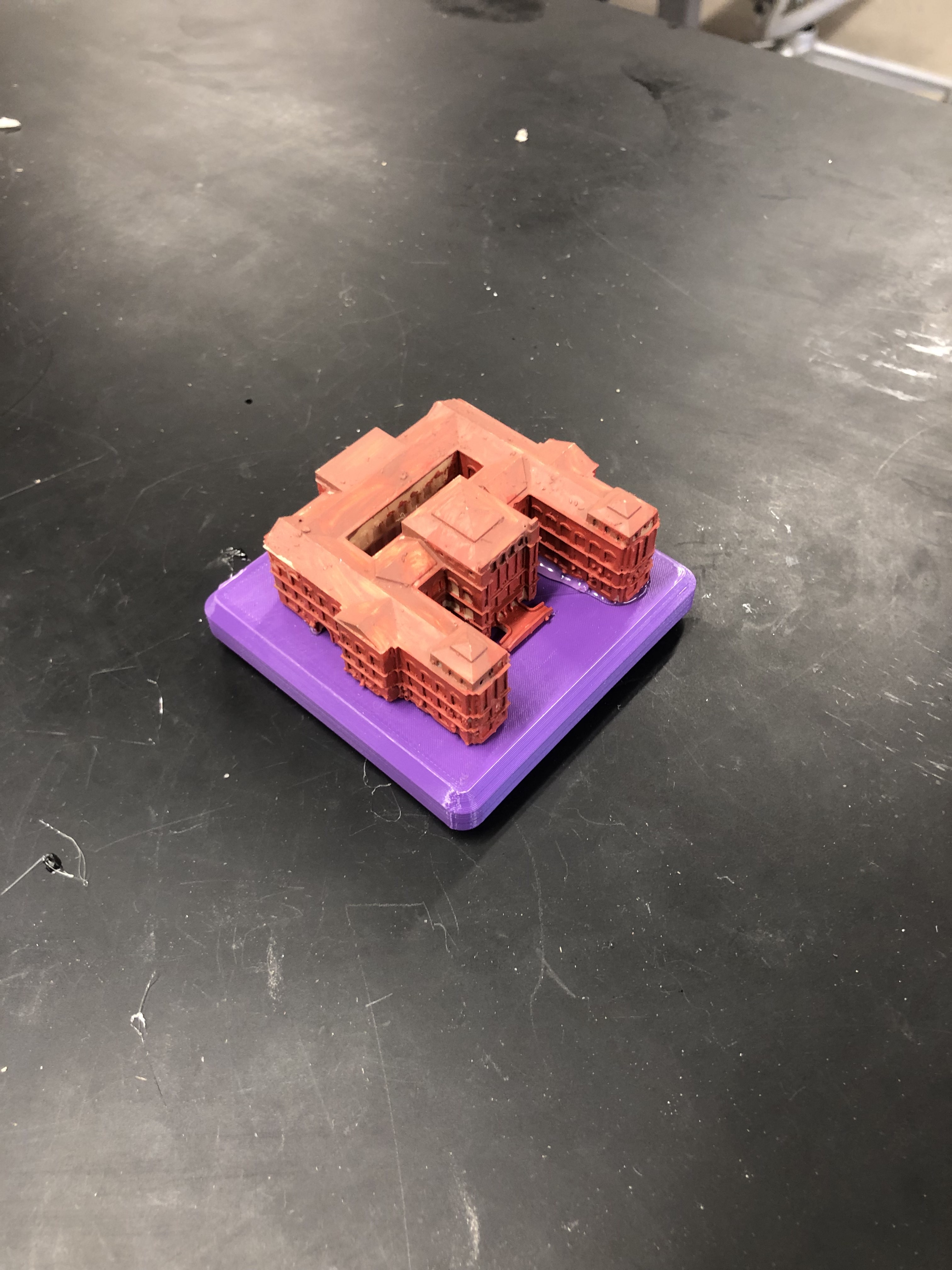
The project went through full engineering design process cycles, from concept generation and decision analysis to proof-of-concept and final prototype iteration. We moved from an initially more complex concept to a cleaner six-slot design to improve usability, reliability, and build feasibility.
I played a pivotal role, doing all of the CAD for the model, and implementing up with the electronics architecture. We used resistor-based sensing, refined the contact geometry to a 3-point system for more consistent detection, and integrated Arduino + LED + MATLAB feedback into one cohesive interaction flow. This allowed for the user to have a seamless experience placing and moving around buildings.
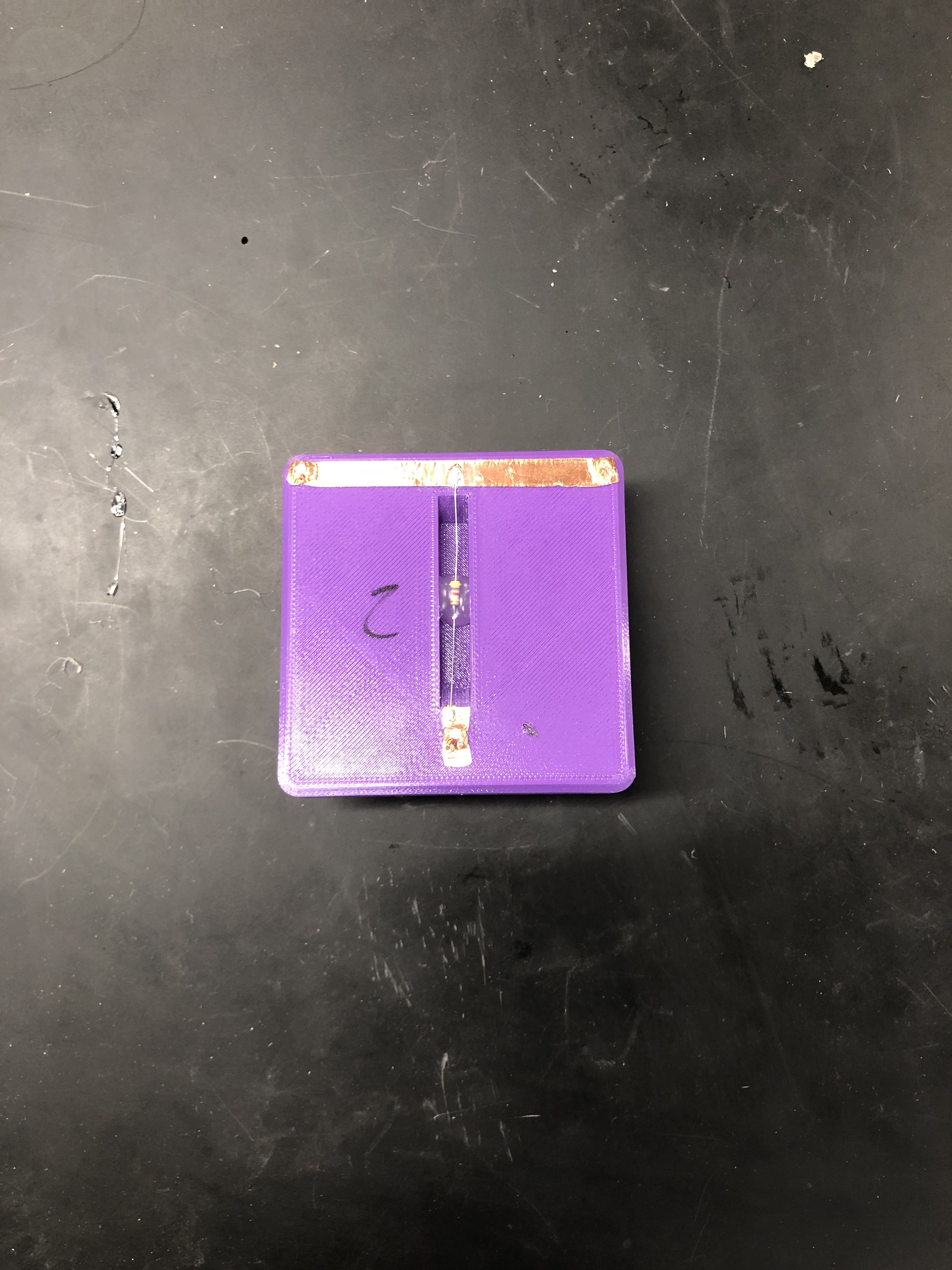
The final exhibit was made lasercut 1/4 in wood, with a sheet of acrylic on top for protection. The led front was also a piece of plywood, with a waterjet 1/4in aluminum plate that acted as the heatsink for the LEDs. All the pieces were held together by a mixture of 3D printed connector blocks and gratuitous use of adhesives.The final build met all major constraints: approximately 20 in × 12 in × 5 in envelope, under the $100 cost cap (about $41.36 actual cost), and setup/breakdown within the required 10 minutes.
In evaluation at design review and expo, the exhibit performed strongly on interactivity, ease of use, and portability. User feedback indicated high engagement (average rating around 4.88/5), and most participants reported learning something new about sustainability. The project highlighted how much educational impact can come from simple, responsive physical interactions when paired with clear visual feedback. Looking back, this was a valuable experience in balancing technical implementation, user-centered design, and communication for a real audience.