Cyclic Test Stand
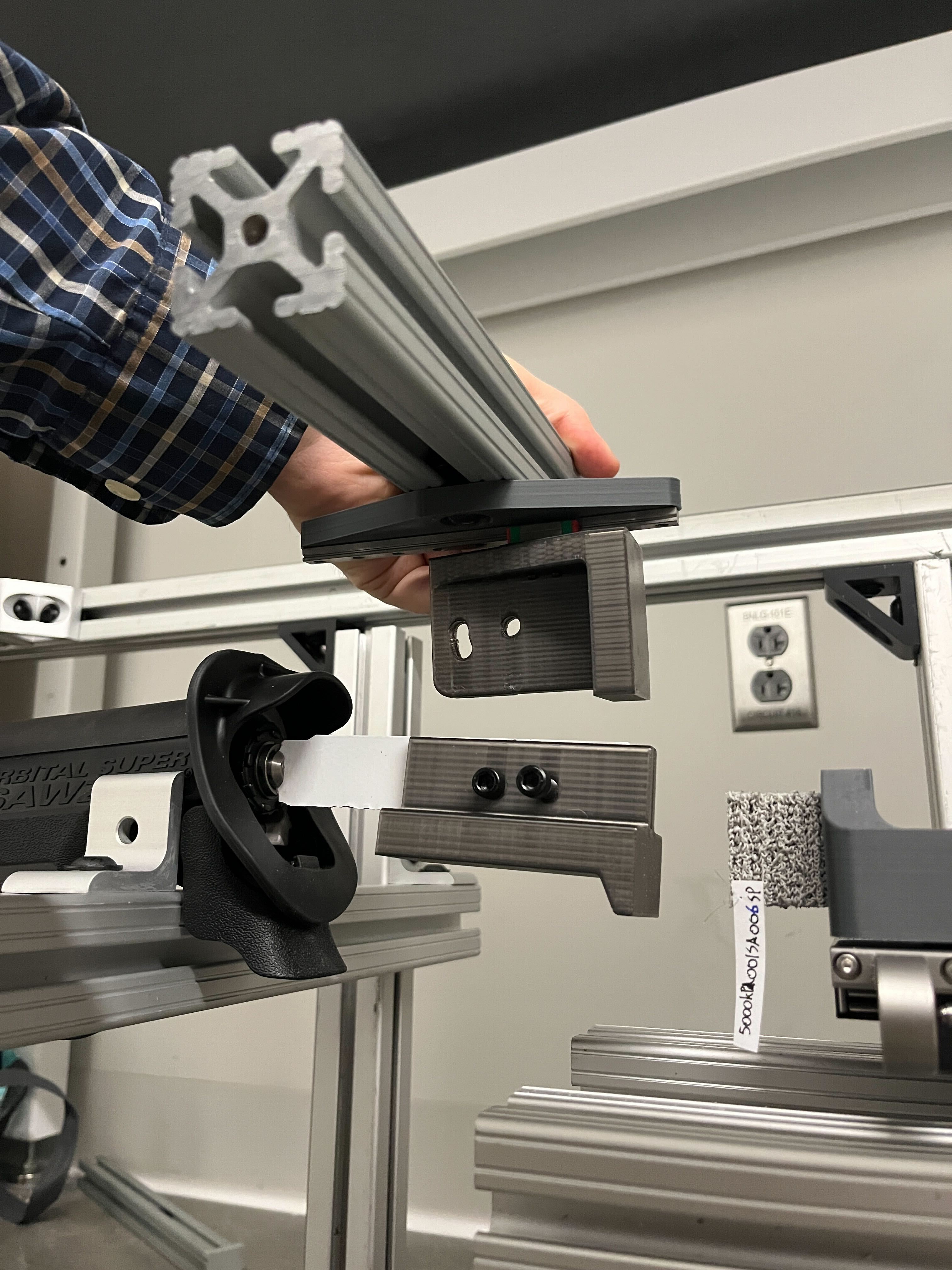
I designed and built this cyclic test stand to repeatedly impact printed foam samples over thousands of cycles, creating a controlled way to study long-term mechanical behavior under repeated loading. The core research question was how foam modulus changes over loaded time, especially for applications where materials are struck or compressed again and again.
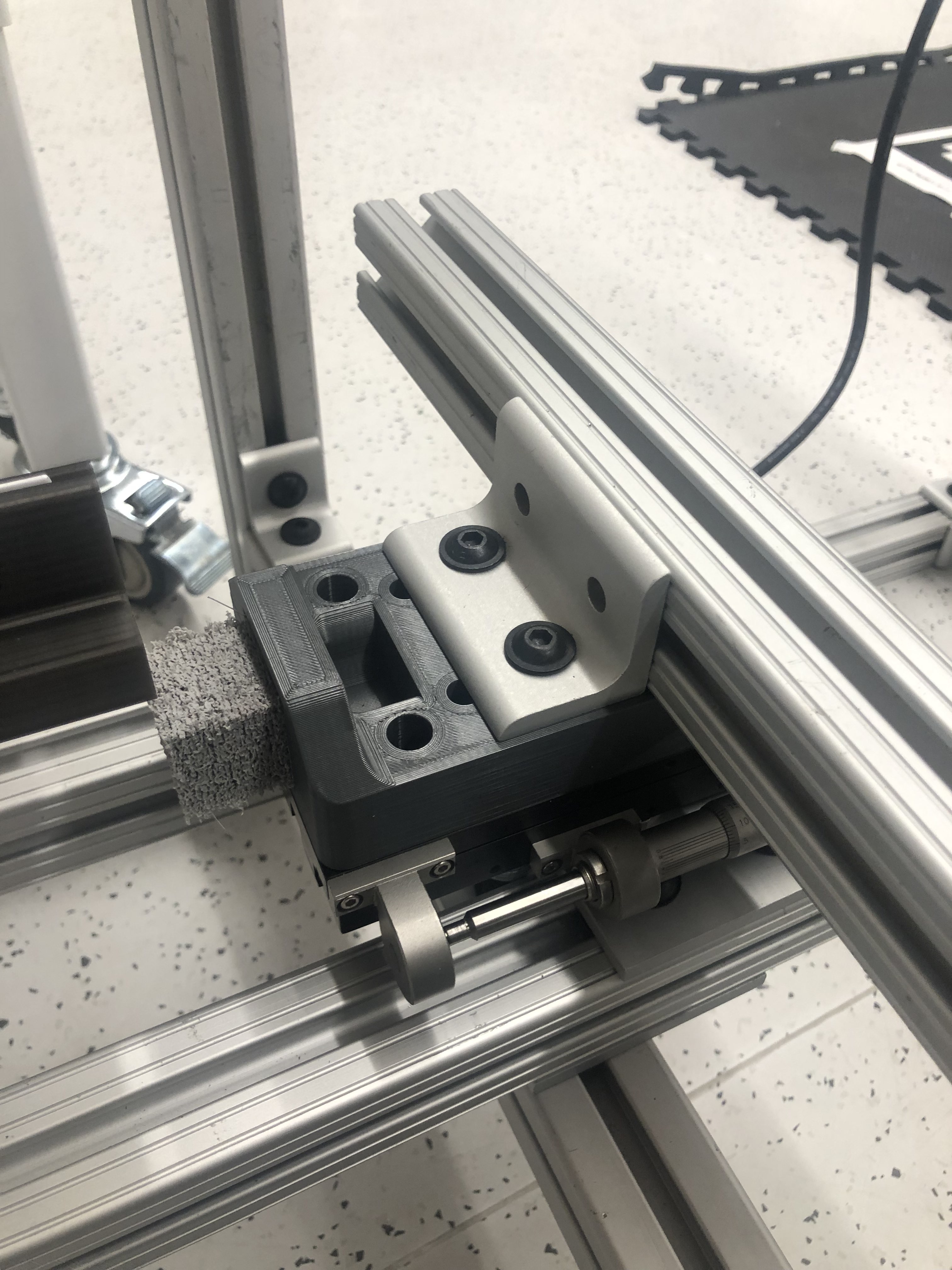
The samples are custom 3D printed foams made with viscous thread extrusion. To generate repeatable loading, I mounted a sawzall in a rigid aluminum-extrusion frame and fixed the foam in place with sharp locating pins. Two linear stages let me precisely center each sample for consistent impact alignment. Because the sawzall stroke is fixed, these stages also let me tune per-cycle compression by moving the sample closer to or farther from the actuator.
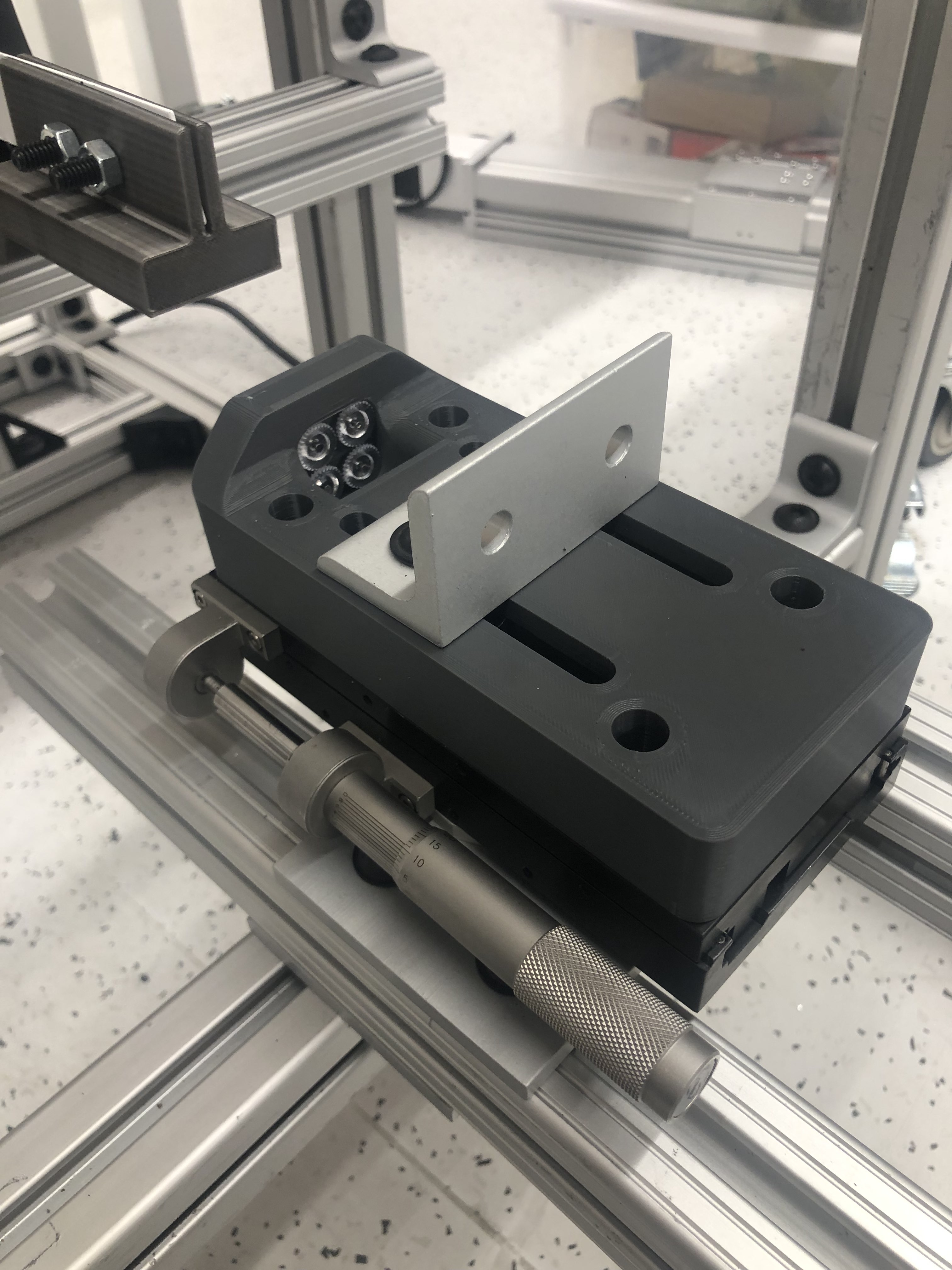
The stand supports multiple loading modes, including compression, shear, and bending, through interchangeable tools and mounts. The fixturing supports the foam from the back for compression, from the bottom for shear, or from either side for bending, while matching toolheads mount to the sawzall. Each interface uses a tapered dovetail so tools locate in a precise, repeatable position after every swap.
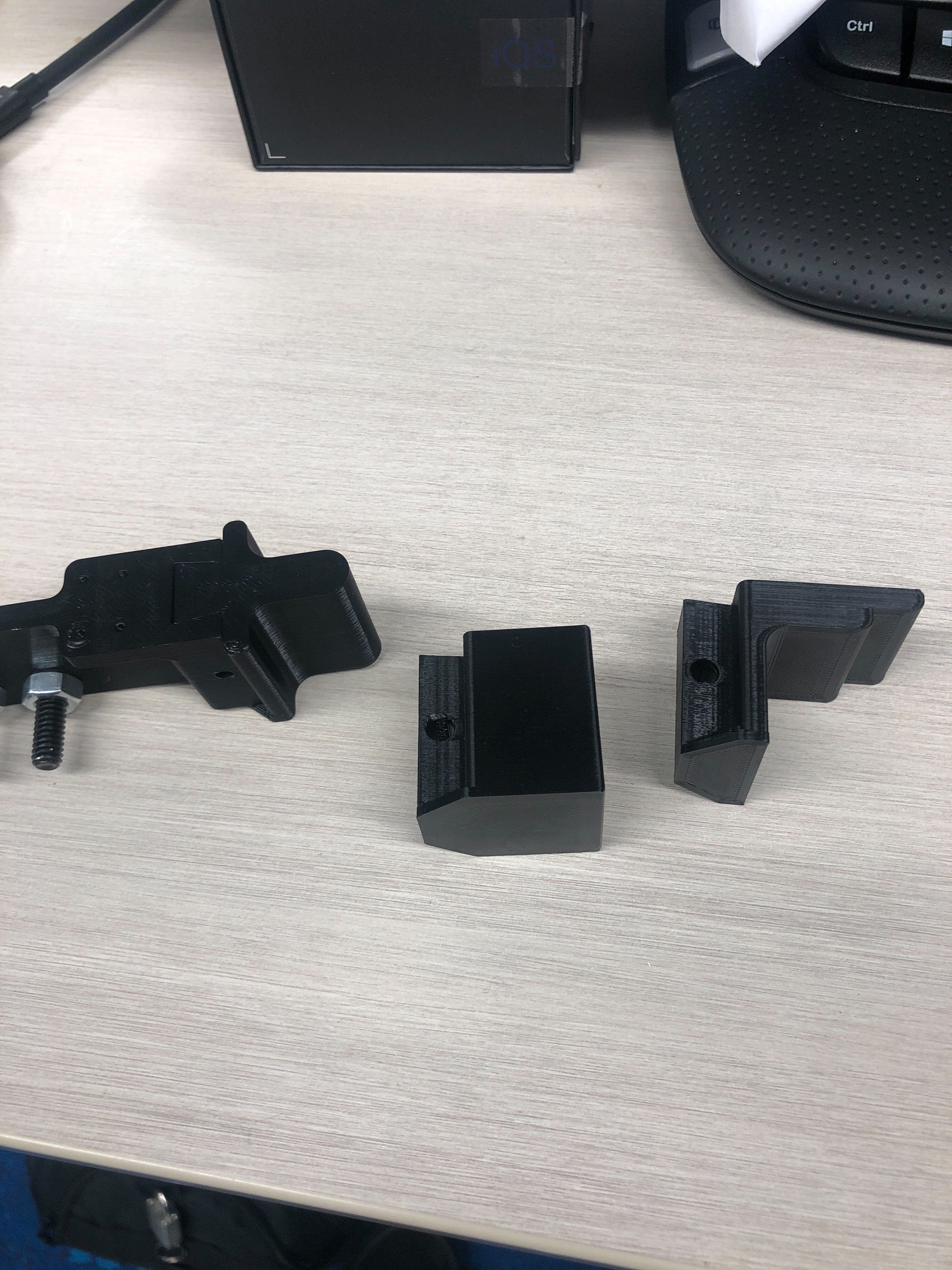
This additional setup view shows the test geometry and fixturing arrangement used during cyclic runs.
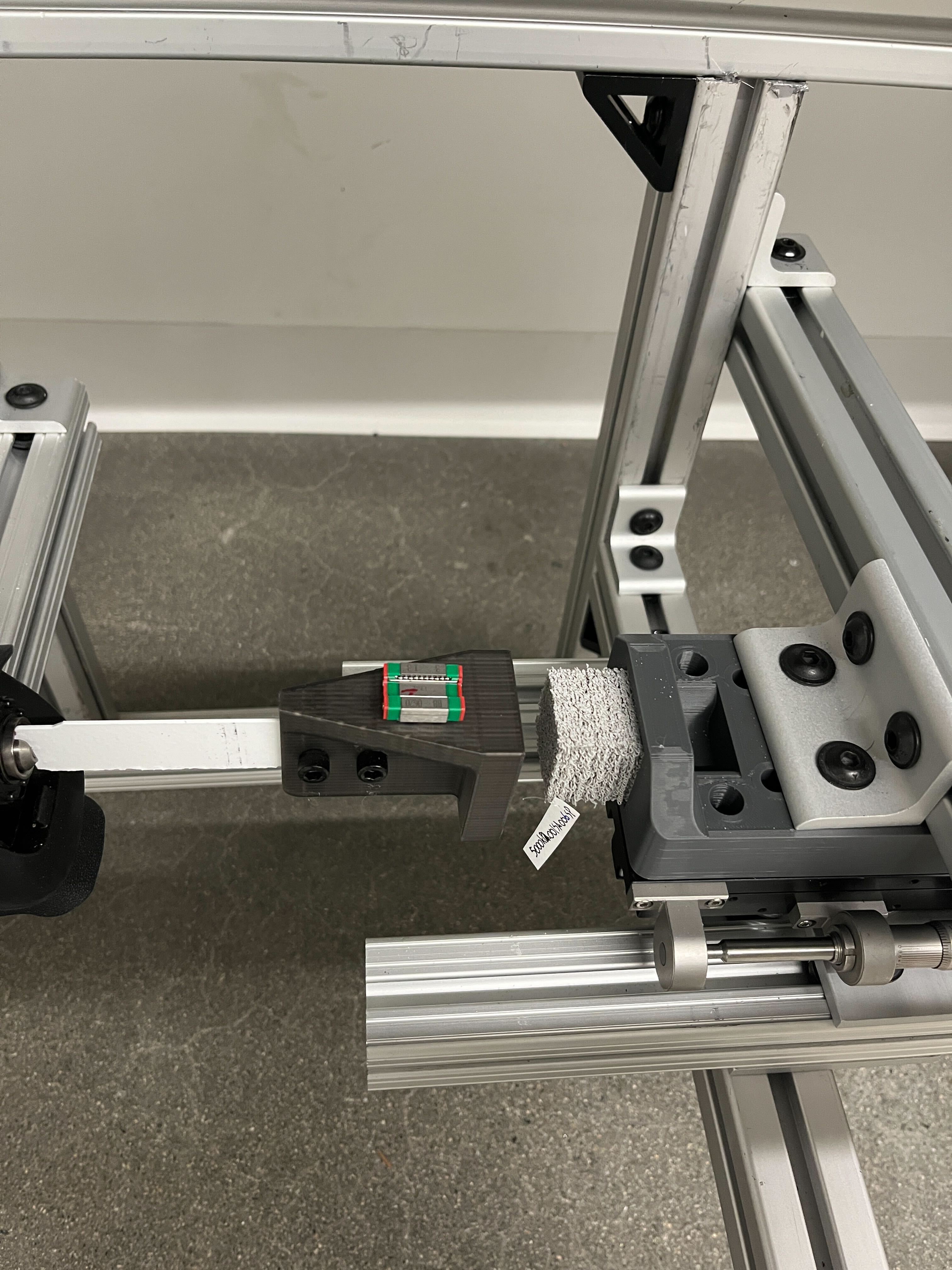
Since this platform is intended to model repeated-step-like loading for potential orthotics applications, consistency over long runs matters. I also monitored system heating during testing to better understand thermal effects that could influence repeatability over extended cycle counts.
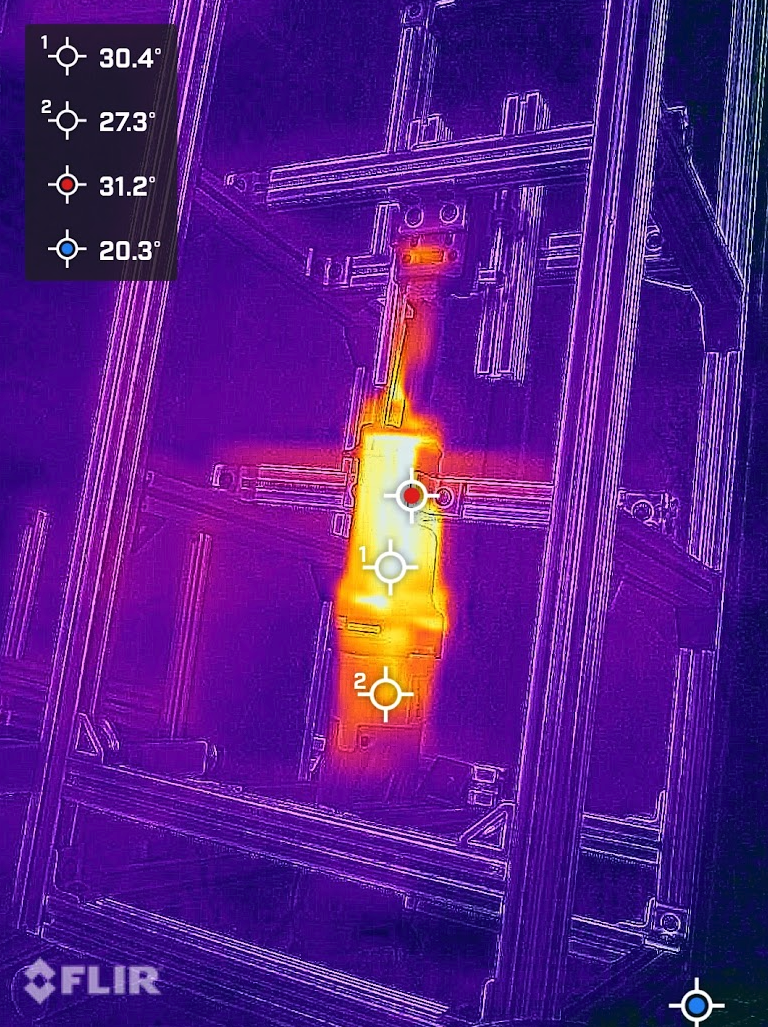
All components were modeled in SolidWorks, and I fabricated and assembled the complete system myself.