Avtrack Fairing and Mount
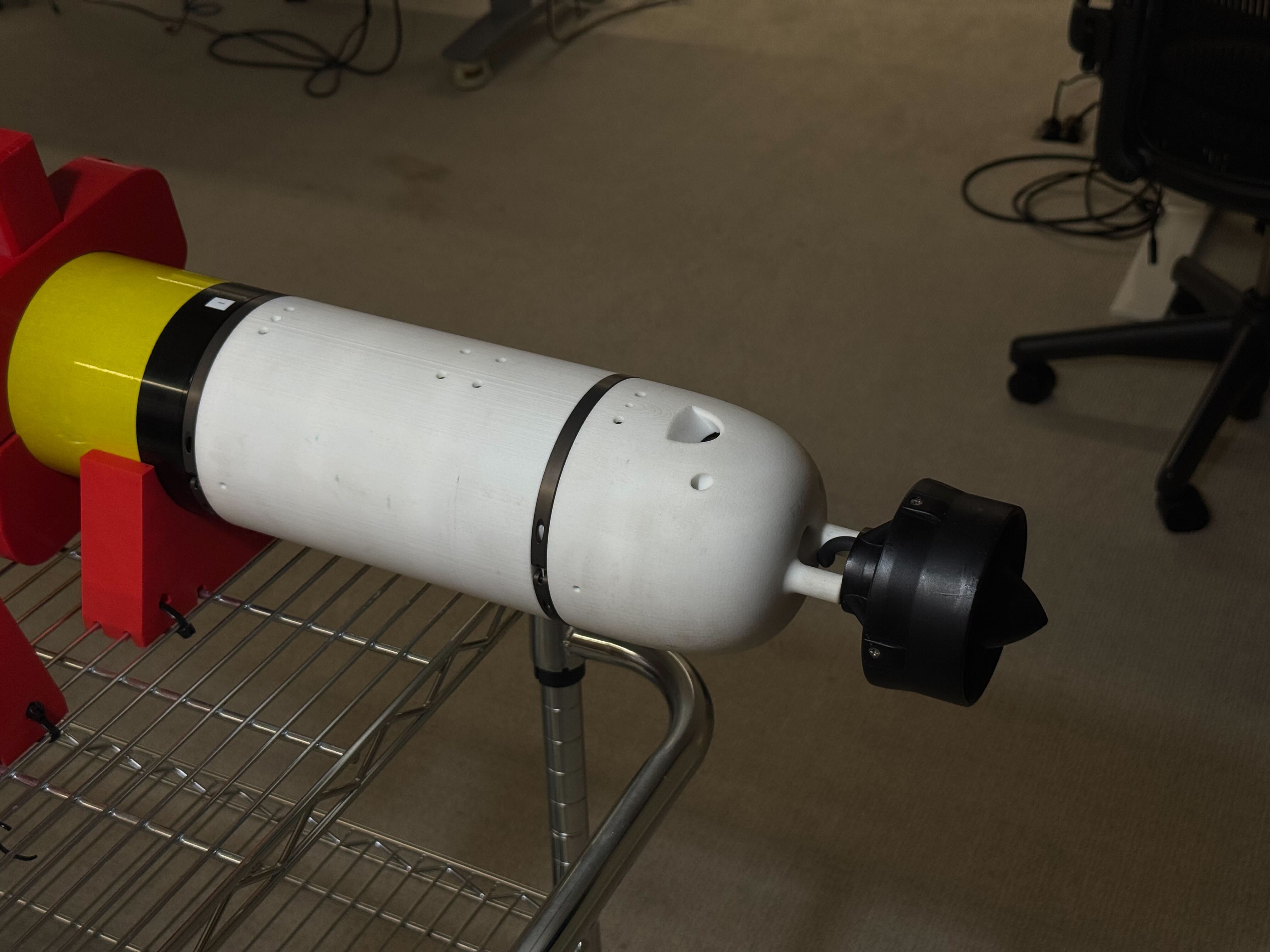
Co-op work at Apeiron Labs. The problem was a simple one to state: the robots were getting lost. Underwater vehicles are hard to track once they are down, and we wanted to be able to communicate with them too. The fix is a sonar-based transceiver, in this case a Sonardyne Avtrack Nano.
The catch was that there was no space inside the vehicle for it. Everything internal was already allocated.
My solution was to extend the fore fairing so it enclosed the transceiver, rather than trying to find room inside. That keeps the existing vehicle untouched and makes the transceiver a module you can add or remove, but it changes the vehicle’s mass distribution, which for something that has to fly through water is the part you actually have to get right.
So the extension carries buoyancy foam and a steel weight, placed deliberately rather than just added. I used Onshape’s weight predictions to work out where and how much of each, sizing them in proportion to each other so the vehicle’s overall balance came out where it started. The goal was to change the hydrodynamics as little as possible while adding a new object to the nose.
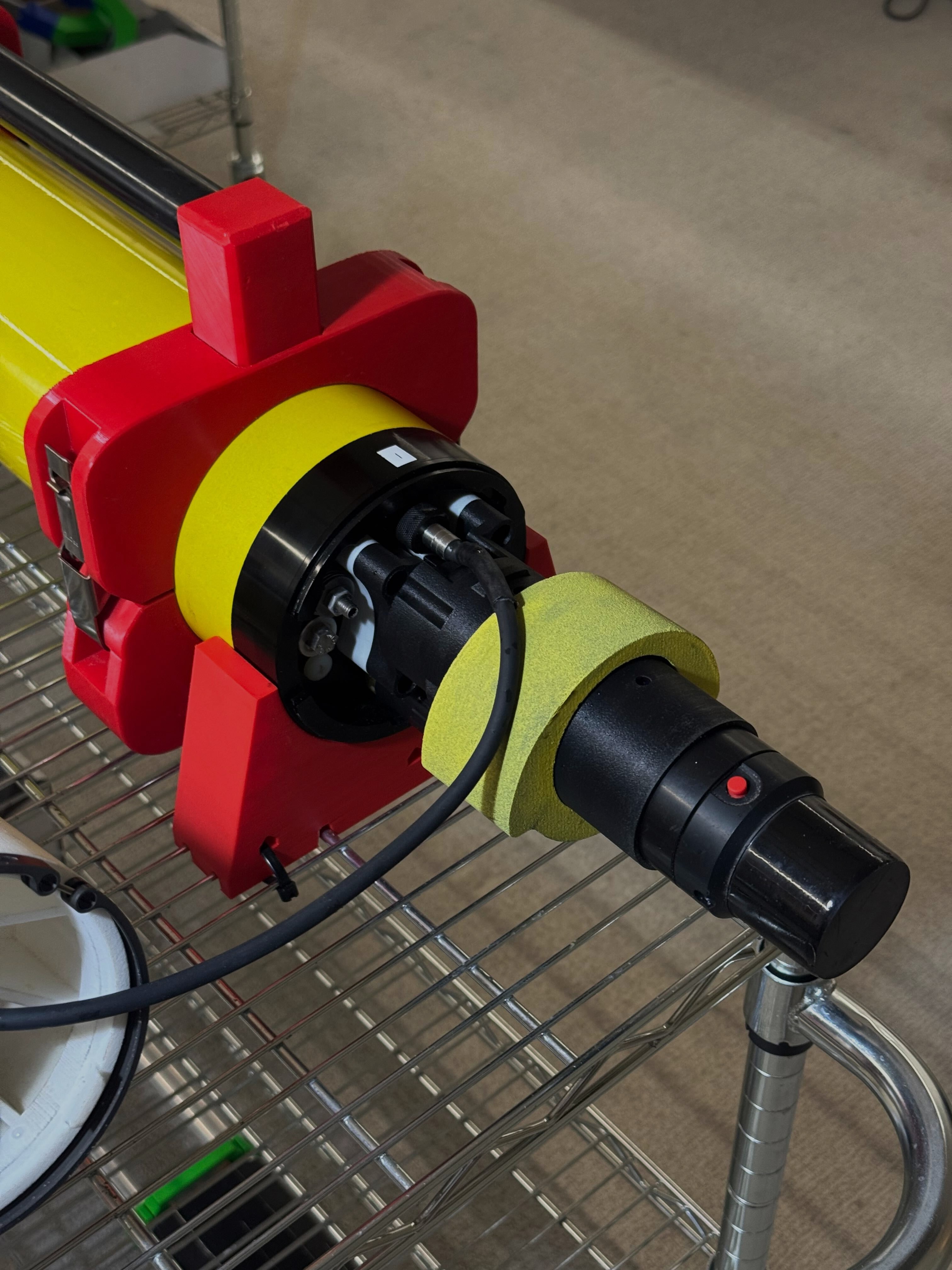
The extension is SLS printed, which suits a fairing: it takes the curved, thin-walled shape without tooling, and printing it means the modular approach costs nothing extra in manufacturing.
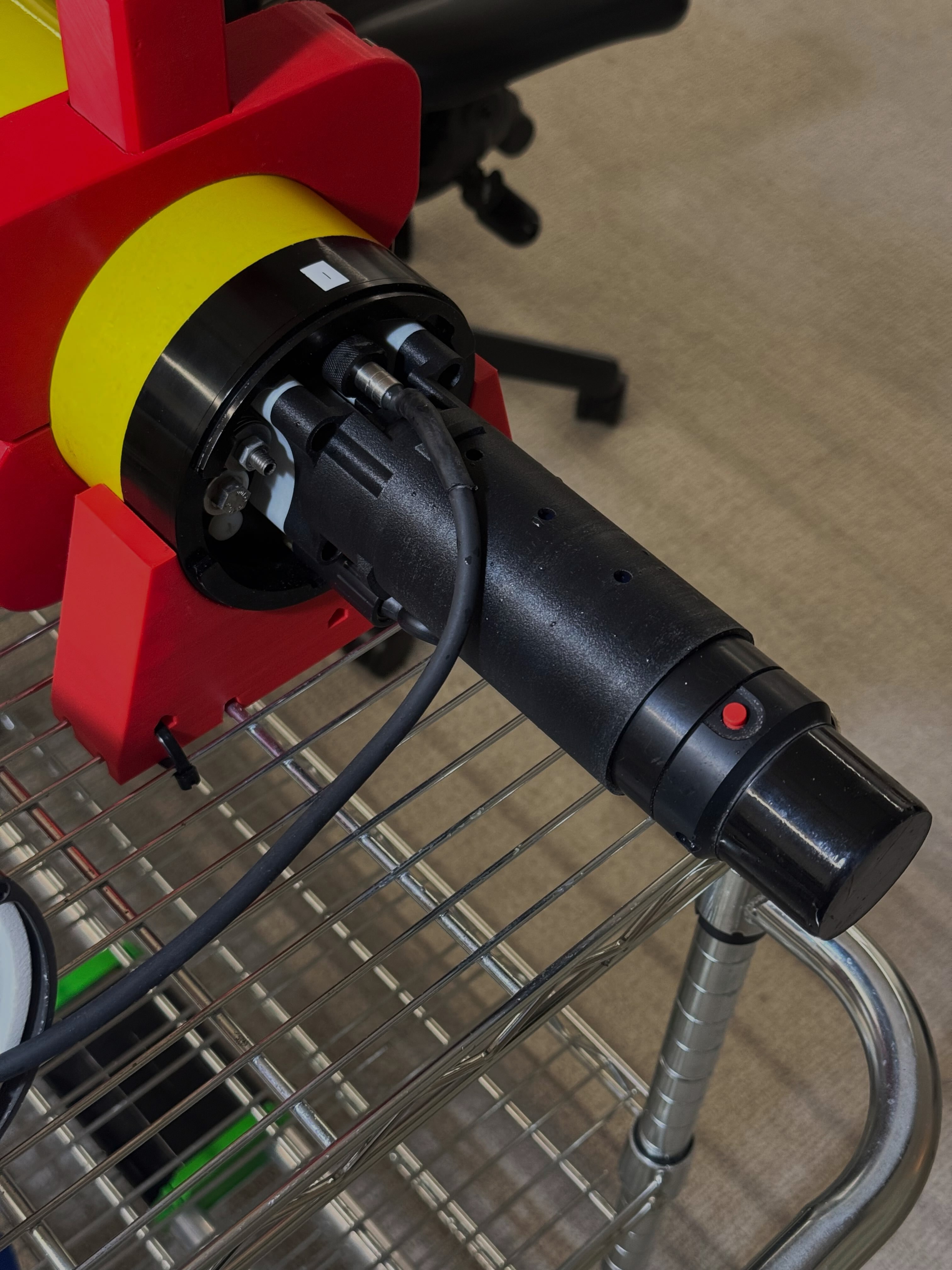
It worked well. All the existing functionality was preserved, and the vehicle got underwater tracking and communication. I took it through drawings and quoting as well.